A contractor’s yard off Route 13 in New Castle. Two equipment trailers, a skid steer, pallets of material, and a dumpster. Last month somebody cut the catalytic converter off one of the trucks overnight. The owner’s done with that. He wants a real fence, and he wants it to actually keep people out.
Chain link is usually where that conversation starts. The trick is choosing the right chain link, because not all of it is built for security.
To choose commercial security fencing, decide five things. Fabric: heavier wire for strength, and smaller mesh if climbing is a concern. Height: taller for security, with barbed wire on top if you need it. Coating: galvanized for the basic job, vinyl-coated for longer life and a cleaner look. Framework: posts and rails sized for the fence height. And gates: placed and sized for how trucks and people actually move. Then think about privacy slats if you also want to block the view in.
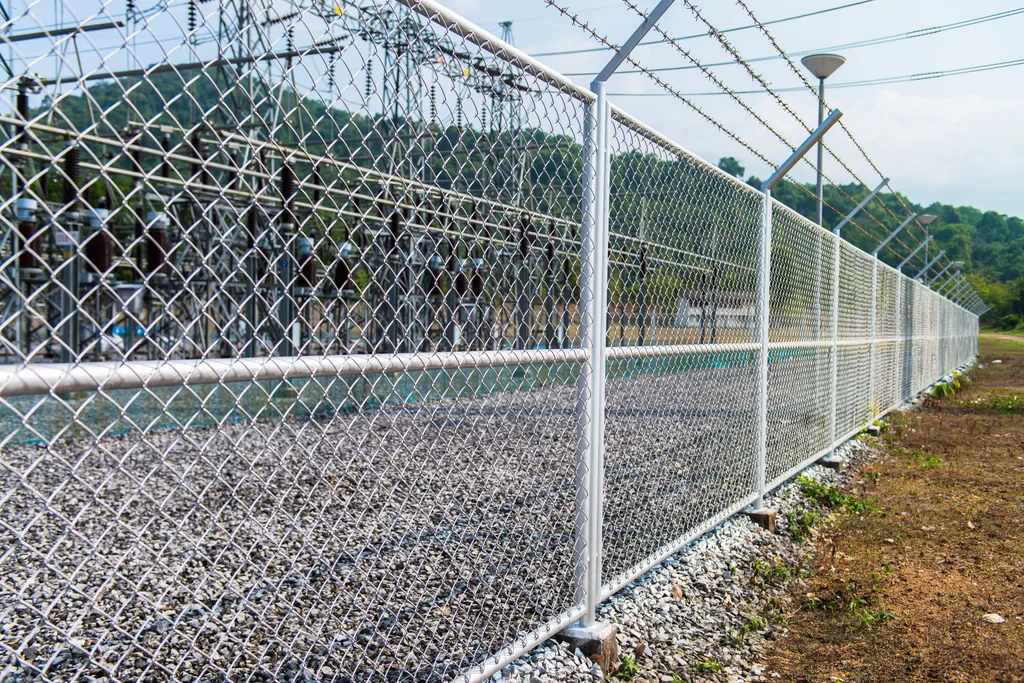
Commercial Chain-Link Fence Installation
Chain link options at a glance
| Choice | Common options | What it means |
| Wire gauge | 6, 9, or 11 gauge | Lower number = thicker wire |
| Mesh size | 2 inch standard; 3/8 to 5/8 inch security | Smaller mesh is harder to climb or cut |
| Height | Commonly 6 to 12 feet for commercial | Taller deters climbing |
| Top | Top rail, barbed wire arms | Barbed wire adds a climbing deterrent |
| Coating | Galvanized, aluminized, vinyl (PVC) | Protects the steel and changes the look |
| Add-ons | Privacy slats, gates | Screening and controlled access |
Start with the wire
Chain link fabric is rated by wire gauge, and the numbers run backward. A lower number means thicker, stronger wire.
The Chain Link Fence Manufacturers Institute, the industry’s trade group, groups fabric by use in its product manual. Six gauge is heavy industrial. Nine gauge is standard for industrial and residential work. Eleven gauge is light industrial and residential. For a business that wants real security, 9 gauge or heavier is the usual starting point.
Mesh size matters too. Standard chain link has a 2-inch mesh. That’s big enough for a toe or a set of fingers to grab onto. The CLFMI lists security fabric with mesh as small as 3/8 to 5/8 inch, which makes climbing and cutting much harder. One catch: per the CLFMI, that small-mesh fabric uses 11-gauge wire and comes in aluminum-coated only.
How tall?
Standard chain link fabric comes in heights from 3 feet up to 12 feet, according to the CLFMI. For a commercial yard, 6 feet is a common minimum. If keeping people out is the whole point, go taller.
Barbed wire on top adds another layer. The CLFMI describes extension arms set at about 45 degrees, or vertical, that hold three strands of barbed wire, with the top strand about 12 inches out from the fence line. Before you add it, check your local zoning. Some areas restrict barbed wire near sidewalks or residential zones.
Pick the right coating
Delaware weather is hard on steel. Hot, humid summers, spring rain, winter freezes, salt in the air near the coast, and road salt near parking lots. The coating is what keeps the steel from rusting out.
Galvanized, which is zinc-coated, is the standard. Aluminized is another option. Vinyl-coated chain link, usually black or green, adds a layer of PVC over the metal. It lasts longer in harsh conditions and looks a lot more finished, which matters for offices, medical buildings and apartment communities. If your site is near the shore, read Best Fence Materials for Coastal Delaware: Handling Salt Air, Wind and Moisture.
Framework holds it all up
The fabric is only as good as what it’s attached to. Corner, end and gate posts carry the most stress, so they’re heavier than line posts. The CLFMI calls for larger terminal posts once fabric gets taller than 6 feet, and bracing at terminal posts for those taller fences. Above 12 feet, a center rail is required.
Ask any installer what post size and spacing they’re using. A contractor who can’t answer is guessing.
Privacy slats
Sometimes security also means hiding what’s inside. Slats woven into the chain link block the view of equipment, inventory and dumpsters. We install commercial chain link with slats for exactly that. Just know that slats catch wind. The CLFMI notes that small mesh and privacy inserts increase wind loads, so the posts and footings need to be planned for it.
Gates make or break the fence
A fence with a bad gate is a fence people prop open.
Plan gates around real traffic. Delivery trucks. Employees. Maintenance crews. Emergency access. A wide rolling or double swing gate for vehicles, and a separate walk gate for people, keeps things moving. We look at your property, how it’s used, who needs access, and which routes vehicles take before we lay out a single post. See our Commercial Fencing page.
Before you dig
Permits and property lines matter on commercial jobs too. Some towns and counties require permits, and you need to know exactly where your line is. Our post Fence Permits and Property Lines in Delaware: What to Check Before Installation covers it.
Bigger site, heavier use? Our Industrial Fencing work handles warehouses, distribution yards and plants. And if an existing fence just needs work, we do Fence Repair too.
Frequently asked questions
What gauge chain link is best for commercial security?
The Chain Link Fence Manufacturers Institute lists 9 gauge as standard industrial and 6 gauge as heavy industrial. Lower numbers mean thicker wire.
What mesh size is hardest to climb?
Security fabric with 3/8 to 5/8 inch mesh is much harder to climb or cut than standard 2-inch mesh.
Is vinyl-coated chain link worth it for a business?
It adds a protective PVC layer over the steel and gives a more finished look, which helps in harsh weather and visible locations.
Do privacy slats affect a chain link fence?
Yes. Slats add wind load, so posts and footings need to be planned for it.
Need a commercial fence in Delaware? LSG Fencing has been installing fences out of Wilmington since 2019. Call 302-374-0596, request a free estimate, read our Testimonials, or see all our Fencing Services.