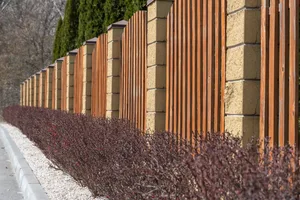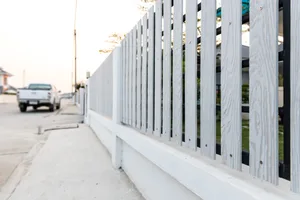
Let’s use a real-ish example. Say you’ve got a quarter-acre lot in Middletown, the neighbors just put in a pool, and the dog has learned to wriggle under the old split rail. You want six feet of privacy around the back, maybe 150 feet of it with one gate. You’ve narrowed it down to wood or vinyl, and every website you’ve read says “it depends,” which, fine, but on what?
Mostly on one thing: how you feel about maintenance. Wood is the cheaper fence to put in, and it looks warm and natural, but it has to be stained or sealed every few years, or Delaware’s muggy summers and wet winters will start working on it. Vinyl costs more on day one. After that, though, you basically just hose it off, since it won’t rot, bugs don’t care about it, and it never needs paint. Its weakness is temperature swings, which over the years can make it expand, shrink and eventually crack. And sometimes the choice isn’t really yours, because an HOA or a deed restriction can settle it before you even get an estimate.
The quick comparison
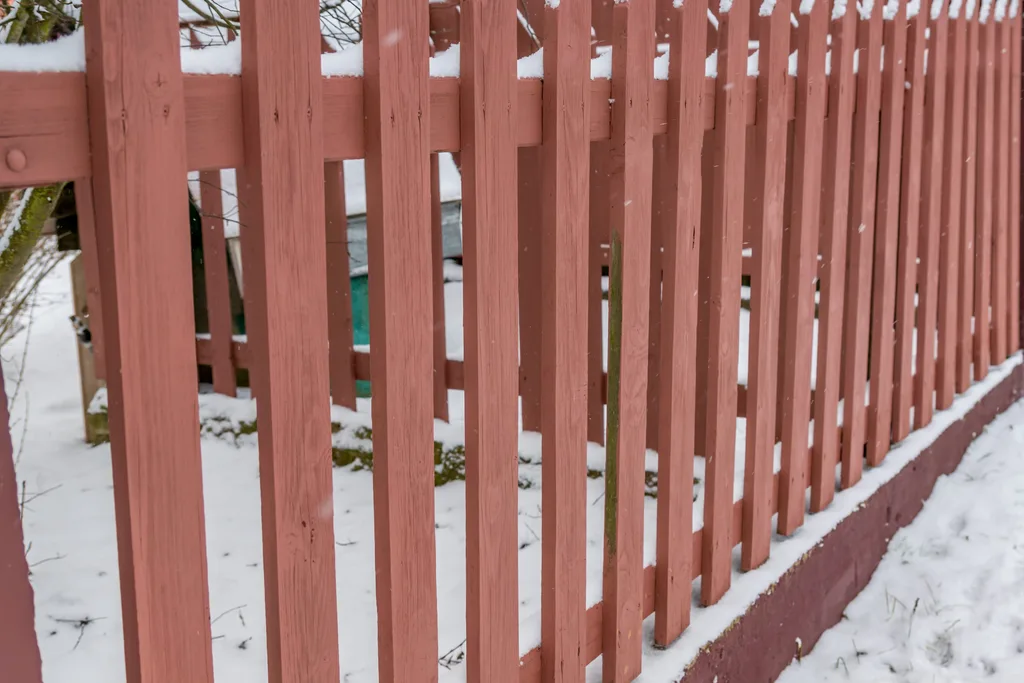
Wood vs Vinyl Privacy Fencing in DE
| Wood | Vinyl | |
| Install cost | Lower | Higher |
| Ongoing work | A stain or sealer every few years | Washing, more or less |
| Rot and bugs | A real risk if it’s not treated and finished | Not an issue |
| What wears it down | Moisture, sun, pests | Hot and cold extremes, which can crack it |
| Looks | Natural grain, any stain or paint color | Clean and uniform |
| If a board breaks | Replace that board | Often the whole panel |
Doing the maintenance math on wood
Here’s where it gets concrete. The USDA Forest Products Laboratory, which studies this stuff for a living, says a semitransparent stain on exterior wood typically lasts somewhere around 3 to 8 years. A solid-color stain runs about 3 to 7 years, paint goes past 7, and a plain water repellent only lasts about 6 to 12 months.
So go back to that 150-foot fence in Middletown. If you stain it with a semitransparent product and keep the fence 20 years, you’re looking at somewhere between two and seven re-stain jobs over its life, depending on the product and how much sun each side gets. The south-facing run will probably need it before the shady side does. Some people don’t mind spending a Saturday with a sprayer every few years. Some people would rather do almost anything else. Be honest with yourself about which one you are.
What vinyl asks of you instead
Not much, really. Once vinyl is up, there’s no painting, staining or sealing at all. You’ll probably wash it once or twice a year, mostly to get rid of the green film that creeps in on the north side, and that’s about it.
The trade-off shows up on the invoice. Our Residential Fencing: Popular Options, Benefits, and Factors Homeowners Should Consider post says it plainly: vinyl can cost more up front than wood. It’s also not completely bulletproof. Big temperature swings, the kind you get going from a 95-degree August afternoon to a January cold snap, make vinyl expand and contract, and over enough years that can lead to cracks.
Don’t skip the posts on a wood fence
This one catches people. Not all pressure-treated lumber is the same, and the difference is printed on a little tag stapled to the end of each board. The American Wood Protection Association says anything going into the ground, like your fence posts, needs a rating of Use Category 4A or higher. The pickets, which stay above ground, need 3B or higher. A post rated only for above-ground use will rot at the soil line years before the rest of the fence wears out, and replacing posts means pulling the fence apart. So it’s worth asking your installer which rating is going into your yard.
Wind, and why a solid fence feels it
Here’s something people don’t think about until a nor’easter rolls through. A solid six-foot fence, wood or vinyl, is pretty much a wall, and every gust pushes on the whole thing at once. The boards don’t really take that load. The posts and the footings do. So on a wide-open lot, or anywhere close to the bay or the ocean, think about a style with a little space between the boards. Your neighbor might catch a sliver of you through it, sure, but the posts will have a much easier time of it.
The rules might choose for you
It’d be a shame to pick out the perfect fence and then find out you can’t build it. If you’re in unincorporated New Castle County, 6 feet is the usual backyard limit (7 at the top if the ground slopes), and in several residential zones anything in the street yard tops out at 4 feet. Got a corner lot? You’ll need to keep a 25-foot sight triangle open so drivers can see around it. As for material, the county doesn’t care whether you go wood or vinyl.
Your HOA might, though. The county lets valid deed restrictions decide a fence’s height and material, which means a line in your development’s covenants like “white vinyl only” settles the whole debate. Down in Kent and Sussex, and in towns with their own codes, the rules are different again. Fence Permits and Property Lines in Delaware: What to Check Before Installation lays out who to call.
So which one should you pick?
Think about the Saturday in year four when the stain’s starting to look tired. If your honest reaction is “fine, I’ll grab the sprayer,” and you like the warmer look of real wood and the lower price to start, go with wood. If your reaction is closer to a groan, or the HOA already picked for you, vinyl will let you forget the fence exists.
One more thing. If your current fence is just leaning or missing a board here and there, you might not need a new one yet. Have our Fence Repair crew look at it before you tear anything out.
Frequently asked questions
Is vinyl or wood better for a privacy fence in Delaware?
Depends on you. If you don’t mind re-staining every few years, wood saves money at the start. If you’d rather never touch it, vinyl’s worth the higher install cost.
How often will I need to stain a wood fence?
Plan on every few years. The USDA Forest Products Laboratory puts semitransparent stain at roughly 3 to 8 years on exterior wood, and solid-color stain at about 3 to 7.
Can vinyl fencing crack?
Over a long enough stretch, yes. Hot summers and cold winters make it expand and shrink, and that movement can eventually crack it.
How tall can a privacy fence be in New Castle County?
Six feet in most backyards there, seven at the top on a slope. Your HOA or deed restrictions can still hold you to less.
Still on the fence? (Sorry.) John Landoll, our owner, will come out for a free on-site estimate and talk through both options standing in your actual yard. You can meet the team on our About Us page first if you like. Call 302-374-0596, see our Residential Fencing services, or request a free estimate.